
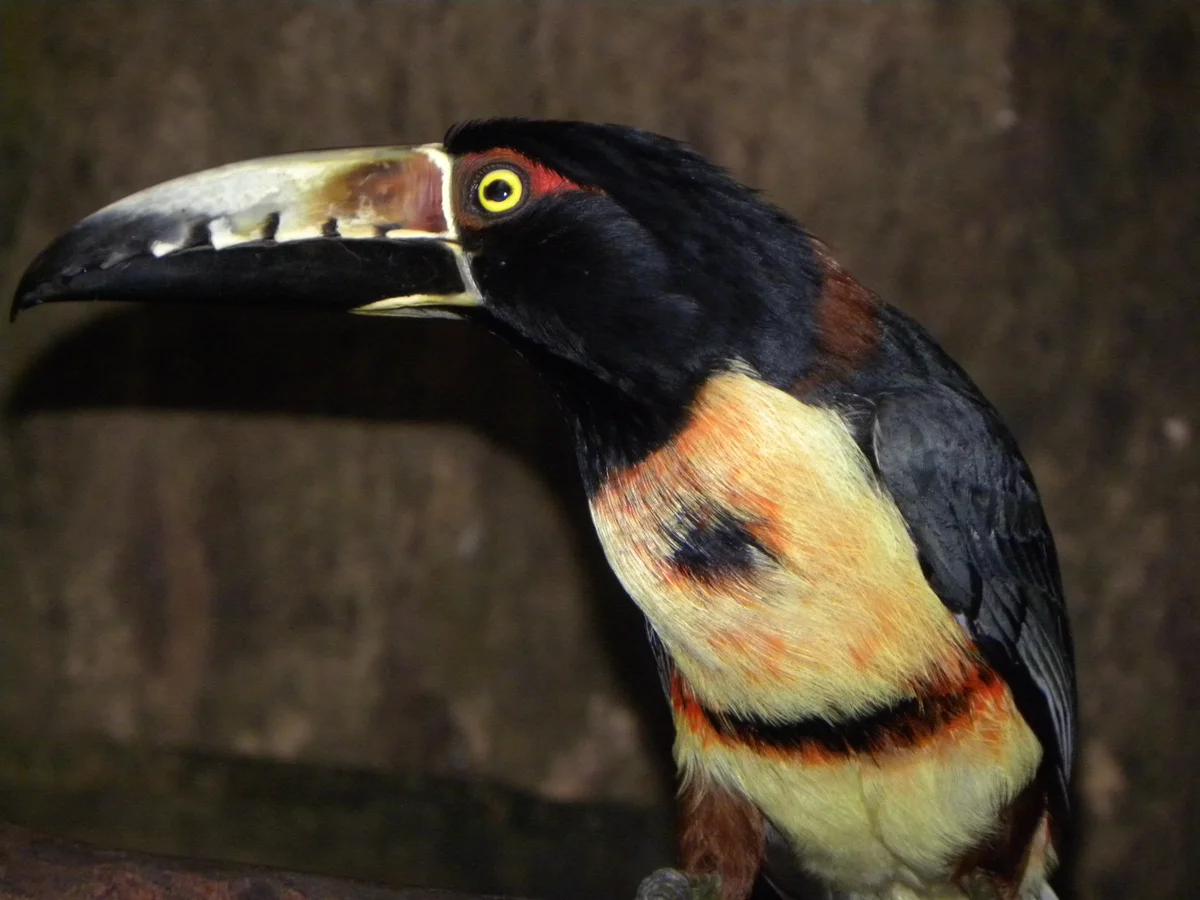
Collared Aracari
ClosedCollared Aracari
Description
Like Other toucans, the Collared Aracari (Pteroglossus Torquatus) is brightly marked and has a large bill. The sexes are alike in appearance, with a black head and chest and dark olive green upperparts, apart from a red rump and upper tail.The upper mandible of the bill is dull yellow, marked with a black saw-tooth pattern on the cutting edge which
Small flocks, usually consisting of 6-15 birds, move through the forest with a rapid direct flight.The collared aracari is a common resident breeder in lowland forests and slightly more open woodland. The 3 white eggs are laid in an unlined natural cavity or old woodpecker nest high in a tree. When the chicks hatch they are fed by both parents and assisted by up to three other adults from a previous brood.
Interesting Facts
- Scientific Name: Pteroglossus Torquatus
- Habitat: Broadleaf forest, secondary forests, and Cultivated areas
- Diet: fruits, insects, bird eggs, and lizards
- Behavior: Arboreal, Diurnal
Fun Facts
- The call of the collared aracari is a loud, sharp “pseek,” or “peeseek.”
- Aracari bills are made of keratin, just like our fingernails!
- They don’t chew their food but prefer to toss the entire food into their mouths and swallow it whole.
- It is one of the three species of toucans native to Belize: keel-billed toucan, collared aracari, and emerald toucanet.
- Toucans, including aracari, are closely related to woodpeckers, jacamars, and puffbirds
Want to Adopt Me?
Learn more about adopting an animal here: How To Adopt An Animal